
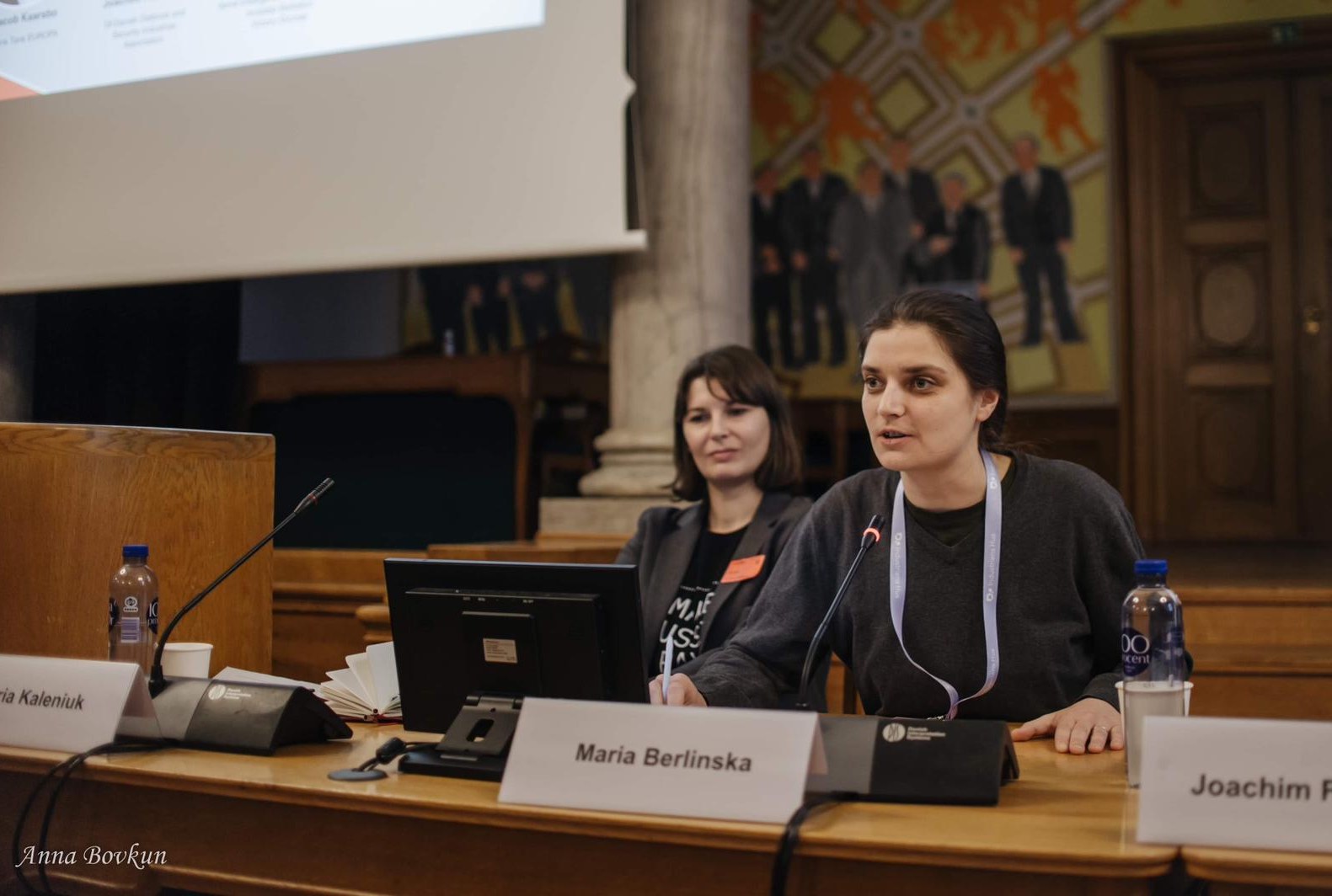
Yesterday evening, important discussions took place during the conference The Economics of the War: How to Invest in Peace in Europe organized by the AUD: Association af Ukrainere i Danmark and Ukrainian Dialogues in the Danish Parliament. The event brought together prominent speakers from Ukraine and Denmark and showed an example of how representatives of non-governmental organizations in Ukraine take responsibility and quickly react to the urgent needs of the country and work side by side with state institutions.

Anne Valentina Berthelsen from Socialistisk Folkeparti opened the discussion and stressed out the importance of timely support to Ukraine and the risks of delay in decisions.
Daria Kaleniuk from the ICUV – International Centre for Ukrainian Victory continued by bringing to the audience’s attention the increased military budgets of Russia and its quite successful transition towards the war economy. The sanctions applied showed limited efficiency, and Daria reminded of 300 billion Russian money frozen in European banks that can be used for supporting the Ukrainian military – the political will is required here.
Claus Mathiesen from the Royal Danish Defence College, outlined that corruption is a sensitive topic to the Danish taxpayers, and such news negatively impacts the decisions on support. He called on Ukraine to be better at bringing to the public successful anti-corruption cases. At the same time, Claus Mathiesen and Anders Overvad, the economic analyst in Think Tank Europe, recognized Ukraine’s progress in its anti-corruption fight.

War veteran Марія Берлінська representing Aerial Intelligence Support Centre and Victory Drones, gave an overview of the role of technologies in this war, and dedicated special attention to drone warfare. The newest technologies and methods of warfare are today applied on the battlefield, and Ukraine has a unique experience in the world in using war technologies at such scale and intensity. Military analyst from the Royal Danish Defence College Anders Puck Nielsen supported Maria’s words and added that drones benefit the defender more than the attacker. He also complemented Ukrainian military operations against the Russian navy and oil and gas objects in the rear. Maria encourages the Danish defense industry and other Western partners to advance Ukraine with existing technologies and commonly develop and test new ones. Ukraine needs a technical breakthrough that can drastically change the force’s balance on the battlefield and reduce the casualties. Ukraine is losing people, and this should be addressed immediately before its army faces a dramatic shortage.
Joachim Finkielman from the Danish Defence and Security Industries Association ensured that Danish companies are ready to collaborate with Ukraine on development and production. He also emphasized the importance of expanding the Danish defense forces. To move forward, Denmark needs political commitment and a long-term strategy.

Jacob Kaarsbo, security policy analyst at the Think Tank EUROPA, stressed that Russian ambitions go far beyond Ukraine, and the success of Ukraine in this war is defining for Europe’s security.
The speakers from Ukraine Daria and Maria closed the conference calling on the partners to work on strengthening the defence capacity at the overall EU and individual countries level in addition to NATO potential. Ukraine is open to sharing its expertise and passing the knowledge to the allies and is ready to support Danish businesses and initiatives at all levels.
Lesia Ignatyk-Eriksen, the head of the Association of Ukrainians in Denmark and co-organizer, expressed gratitude to the participants of the discussion and attendees, she emphasized the important role of civil society.

Today, it is exactly Ukrainian activists and volunteers who have ensured enormous progress in professional development and mastering the newest technologies. The civil society segment not only controls the actions of the Ukrainian government but also stimulates reforms, creating high-quality alternatives and raising the standards. More and more NGOs in Ukraine consult state institutions and directly cooperate with the Armed Forces in the rear and on the battlefield.